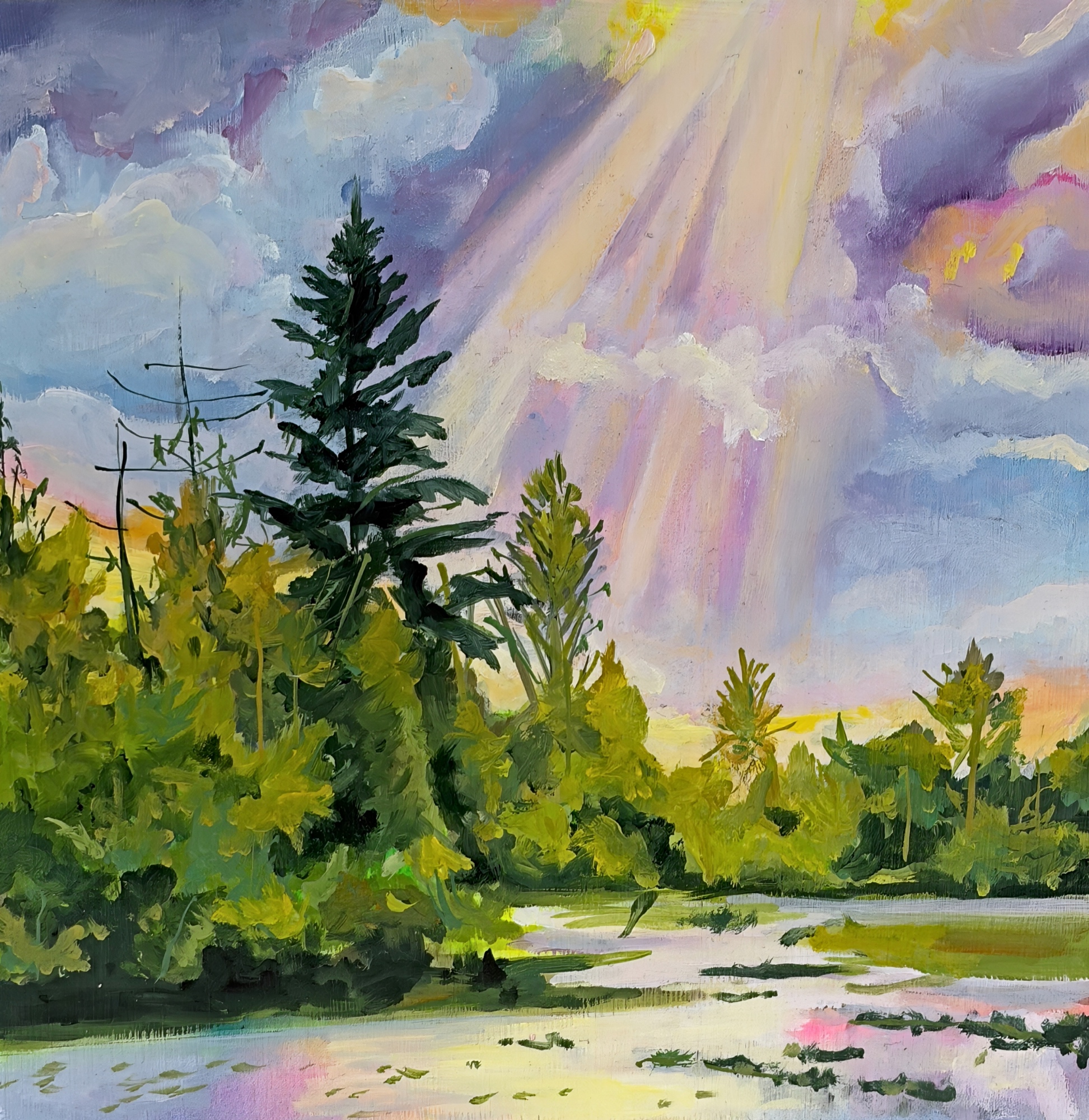
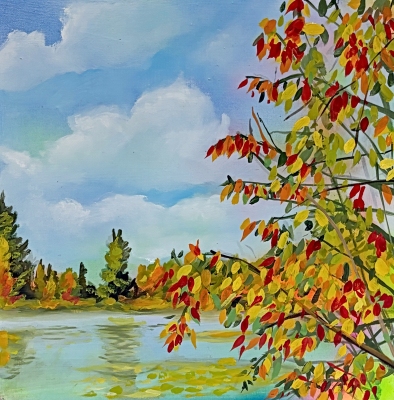
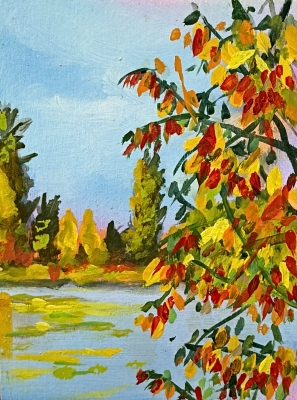
Magic in the Stillness 2
8" X 8" (20cm X 20cm)
Love Art? Stay current with new arrivals, events, and exclusive content!
“For the past several years, I have been reexamining my painting practice and my role as an artist. I am particularly interested in the uncertainty that exists between abstraction and representation, where one visual language slips into another. I believe painting should resist immediate understanding. There should be a journey, a sense of discovery, and ultimately a reward for looking. This relationship between what is recognizable and what remains unresolved continues to inform my approach to painting.
“Landscape has become an important vehicle for exploring these ideas. I am drawn to the transformative qualities of light, atmosphere, colour, and the changing conditions of the natural world. These elements offer opportunities to investigate both the physical construction of a painting and our emotional connection to place. My paintings often begin with familiar locations, but through heightened colour, layered surfaces, and expressive mark-making, they move beyond literal representation toward something more contemplative and experiential.
“I want the process of painting to remain visible. Brushstrokes, accumulated layers, and the physical qualities of paint should be understood as integral to the experience. Up close, the surface reveals its construction; from a distance, these individual marks optically blend, allowing space to open and forms to emerge. This shifting relationship between surface and illusion invites viewers to reconsider what they are seeing and how they experience an image.
“Increasingly, my practice also considers the relationship between people and their environments. Landscape is never entirely separate from human experience. It carries personal histories, memories, and evidence of our changing relationship with the land. Through sustained observation and engagement with particular places, I am interested in how painting can encourage environmental awareness, reflection, and a deeper appreciation of the spaces we inhabit.
“In an increasingly digital world, painting offers something fundamentally different from the images we encounter on screens. While technology influences how we see, interpret, and understand the world, the physical presence of a painting remains singular. It demands time, attention, and an encounter that cannot be fully reproduced digitally. I see painting as a form of meditation, a necessary counterpoint to the speed and abundance of contemporary visual culture.
“Ultimately, painting is about the experience of being human. It offers moments of wonder, uncertainty, and connection while reminding us that looking is an active and meaningful pursuit. A painting does not change; it changes you.”
Christopher Friesen is a painter, community advocate and an educator. Friesen lives in Langley, British Columbia. Friesen was born in Chilliwack, British Columbia. His work has been shown extensively throughout Western Canada in public and commercial galleries. Friesen has work in international public, private and corporate collections.
His teaching focuses on painting, drawing and different modes of cultural discourse ranging from specific formal painting concerns to community engagement through mural projects. Friesen is an Associate Professor at the University of the Fraser Valley (UFV) in the School of Creative Arts (SoCA). Prior to UFV, He worked as a sessional instructor at the University of Regina. Friesen is past president of the Abbotsford Arts Council (serving on the Board of Directors from 2004-2022). He was also a past executive on the board of directors for the Friends of Public Art in Abbotsford and a former advisor on the Arts and Heritage Advisory Committee to the City of Abbotsford.
Friesen currently sits on the Board of Directors for the Fort Gallery. Friesen has been involved in bringing numerous artists in to the community of Abbotsford to present their research. He has been on juries for public art proposals to the City of Abbotsford as well as a juror, founder and committee member of the Fraser Valley Regional Biennale 2011, 2013, 2015, 2017 and 2019. He received his Bachelors of Fine Arts (BFA) from the University of Lethbridge and his Masters Degree in Fine Art (MFA) from the University of Regina.